
How to Play Fantasy Cricket on Hero11, Start to Finish
One fixture, one squad, one contest. This is the whole sequence a first-time player goes through, including the two places where beginners reliably lose value.
18+ only · Skill-based fantasy · Android 7.0+ · 3.14 MB file
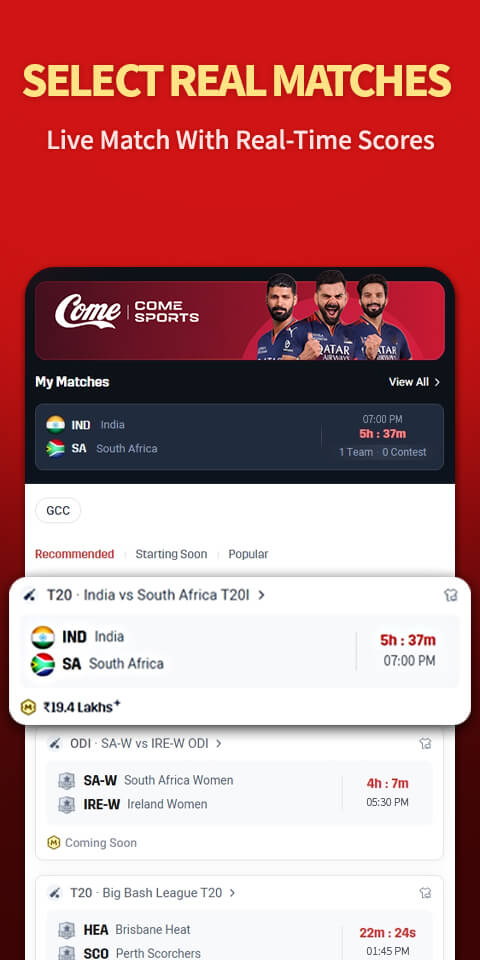
The sequence
- Pick a fixture you will actually follow. Fantasy is more instructive when you watch the match, and far less frustrating.
- Open the contest list and read the cards. Entry fee, field size and prize split are all printed before you commit to anything.
- Wait for the team news. The single most valuable input arrives close to the toss. Draft early, finalise late.
- Fill the role minimums first. The builder will not save an illegal squad, so meeting the minimums early stops wasted effort.
- Spend the remaining credits on conviction picks. Two or three players you are confident about, paid for by cheaper selections elsewhere.
- Name captain and vice-captain. Pick for guaranteed involvement rather than reputation.
- Join the contest and leave it alone. Watching a live rank for three hours changes nothing about the result.
The two mistakes that cost most
Picking before the team sheet
A squad built two days early usually contains at least one player who is rested or left out. Credits spent on a player who does not take the field are simply gone, and no captain choice recovers them. Draft early if you like, but always revisit after the toss.
Choosing the wrong contest for the team
A safe, consensus squad entered into a huge field will finish mid-table with thousands of identical teams. The same squad in a head-to-head is perfectly sound. Match the shape to the team, not the other way around.
A worked example
Take a T20 fixture with a surface known to slow down under lights. A reasonable thought process looks like this:
- Bowling first matters, so spinners bowling in the middle overs gain value and the captain pick drifts toward them.
- Openers from the side batting first get the best conditions, which makes them the safer batting picks.
- The death bowler on the chasing side has wicket chances even if the economy suffers; wickets outweigh runs conceded in most sheets.
- A lower-order finisher is left out, because he may not bat at all.
- Credits freed by skipping a famous but out-of-form batter pay for a second frontline bowler.
None of this guarantees a win. It produces a squad whose logic you can review afterwards, which is the only way the next contest is better than this one.
After the match
- Open the scorecard next to your point breakdown and see which picks earned and which did not.
- Separate a bad process from a bad result. A sound pick that failed is not the same as a pick made without checking the eleven.
- Note which contest shape you entered and whether it suited the team you built.
- Withdraw winnings rather than rolling them forward automatically.
Deeper detail: how points are earned and choosing a captain.
Beginner questions
I am new. Which contest should I join first?
A practice contest, then a very small paid one. Seeing the full cycle once, from selection to result, teaches more than reading about it.
How long before the toss should I pick?
Draft early, finalise late. The team sheet is the single most valuable piece of information and it arrives close to the toss.
What is the most common beginner mistake?
Picking a squad before checking who is playing. A big-name player left out of the eleven scores nothing and the credits spent on him are simply gone.
Should I copy a popular team?
In a head-to-head it is defensible. In a large field it guarantees you finish level with thousands of others, which is not where the money is.
Join a Hero11 contest
The contest button opens the fantasy lobby in any mobile browser. The download button opens the promo page for the Android file.
18+ only · v1.13.f675 · Android 7.0+ · Paid contests excluded in Andhra Pradesh, Assam, Odisha, Telangana, Nagaland and Sikkim
Why the order of operations matters more than any single pick
Almost every avoidable loss in fantasy cricket comes from doing the right things in the wrong order. Picking before the eleven is announced. Choosing a contest after building the squad. Deciding the captain first and letting the rest follow.
The sequence on this page is ordered by information arrival: cheapest and earliest first, most valuable and latest last. Team news arrives near the toss, so editing has to as well. Contest shape is knowable immediately, so it can be decided early. Captaincy depends on the toss, so it goes last.
Follow that and most of the common errors become impossible rather than merely discouraged.
The review habit that compounds
One contest reviewed honestly teaches more than five entered quickly, and costs four entry fees less. The review is short: open the point breakdown next to the scorecard and ask four questions.
- Did anyone score zero because they were not in the eleven? That is a process failure, not bad luck.
- Did the captain get the involvement you expected, and was the shortfall foreseeable?
- Did the cheap picks contribute, or were the premiums funded by players who scored nothing?
- Was the contest shape right for the squad you built?
Then carry exactly one change into the next fixture. Changing five things at once means the next result teaches you nothing either.